
 11
11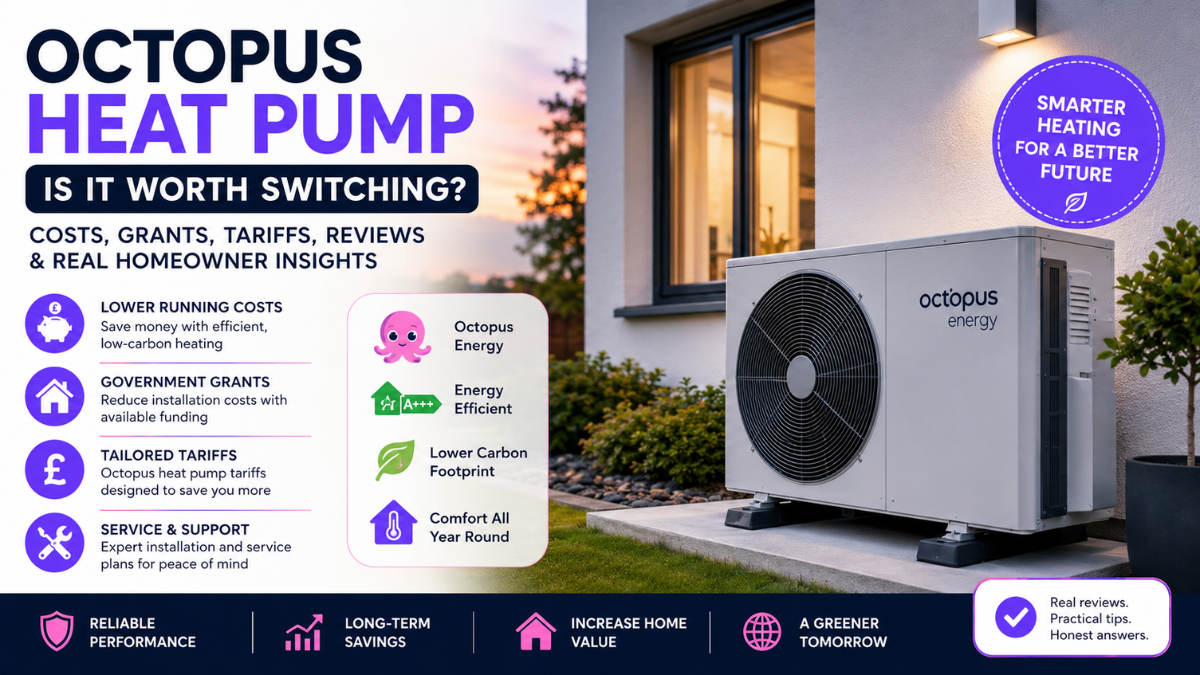
If you’ve been thinking about replacing your gas boiler, you’ve probably come across the octopus heat pump. With rising energy prices, government incentives, and growing interest in low-carbon heating, many homeowners are asking whether making the switch is actually worth the investment.
The challenge is that there is a lot of conflicting information online. Some people claim heat pumps dramatically reduce bills, while others say they’re expensive and only work in new-build homes. The truth lies somewhere in the middle. Your home’s insulation, heating system, and lifestyle all play an important role in determining whether a heat pump will perform well.
This guide explains everything you need to know about the octopus heat pump, from installation costs and available grants to real customer experiences, tariffs, servicing, and long-term savings. You’ll also learn about situations where a heat pump may not be the best choice and practical tips that can improve efficiency from day one. By the end, you’ll have a realistic understanding of whether an Octopus heat pump is the right investment for your home.
An Octopus heat pump is an air source heat pump installed through Octopus Energy. Instead of generating heat by burning gas, it extracts warmth from the outside air—even during cold weather—and transfers it indoors.
Unlike traditional boilers, heat pumps operate at lower water temperatures while running for longer periods. This creates a consistent indoor temperature rather than the familiar cycle of heating up and cooling down.
Most installations include:
The aim is to reduce carbon emissions while lowering running costs, especially when combined with electricity tariffs designed for heat pump users.
The technology is surprisingly similar to a refrigerator—but in reverse.
Here’s a simplified process:
Even when outdoor temperatures fall below freezing, enough heat remains in the air for the system to operate efficiently.
Not every property is identical, and neither is every heating system.
An Octopus heat pump generally works best for:
It may require additional upgrades if:
One of the biggest misconceptions is that old homes cannot use heat pumps. Many Victorian and Edwardian houses successfully run them after appropriate insulation improvements.
One of the first questions homeowners ask is about octopus heat pump cost.
The total price varies depending on:
Without financial support, a complete installation can cost several thousand pounds.
However, many homeowners qualify for government assistance, making the upfront investment significantly more affordable.
It’s important to think beyond installation costs alone.
A heat pump may:
Many customers benefit from an octopus heat pump grant, which can dramatically reduce installation costs.
Octopus helps eligible homeowners apply for available government funding and often manages much of the paperwork during the installation process.
Eligibility typically depends on:
Before assuming you don’t qualify, it’s worth checking because many homeowners are surprised to discover they meet the criteria.
The octopus heat pump tariff is specifically designed for homes using electric heating systems.
Unlike standard electricity tariffs, these plans often reward homeowners for using electricity when demand is lower.
Potential benefits include:
Using a standard electricity tariff can reduce the financial benefits of owning a heat pump.
Choosing a tariff designed for heat pumps helps maximize efficiency.
One concern people often have is winter performance.
Modern heat pumps continue operating efficiently during cold weather.
Rather than producing intense bursts of heat like gas boilers, they provide:
Many first-time users initially think their system isn’t working because radiators don’t become extremely hot. In reality, they’re designed to stay warm for longer periods rather than heating rapidly.
This different heating style often results in a more comfortable indoor environment.
Reading an octopus heat pump review reveals a mixture of experiences, but several themes appear consistently.
Positive feedback often includes:
Some negative reviews mention:
Interestingly, households that spend time learning how their heat pump works often report greater satisfaction than those expecting it to behave exactly like a gas boiler.
Many people search for octopus heat pump review martin lewis because they want independent opinions before investing.
Financial experts frequently encourage homeowners to consider the total cost of ownership rather than focusing solely on installation prices.
Important considerations include:
The overall value depends far more on the home’s characteristics than on marketing claims.
Like any heating system, regular maintenance improves performance.
The octopus heat pump service plan typically focuses on:
Routine servicing helps detect small issues before they become expensive repairs.
Unlike gas boilers, heat pumps generally contain fewer combustion-related components, but professional servicing remains important.
Many homeowners unintentionally increase electricity usage by operating heat pumps incorrectly.
To maximize efficiency:
A steady heating schedule usually costs less than repeatedly reheating a cold house.
Understanding these mistakes can improve satisfaction immediately.
Heat pumps warm homes gradually instead of producing instant heat.
Poor insulation forces the system to work much harder.
Frequent temperature changes reduce efficiency.
Annual servicing helps maintain long-term performance.
Running a heat pump on an unsuitable electricity tariff may increase bills unnecessarily.
Many homeowners expect lower bills to be the biggest advantage.
In reality, one of the most noticeable improvements is consistent indoor comfort.
Instead of rooms repeatedly becoming too hot and then cooling quickly, temperatures remain remarkably stable throughout the day.
This difference often becomes more valuable than homeowners initially expected.
An unexpected benefit is that installing a heat pump often motivates homeowners to improve insulation, seal drafts, and better understand their home’s energy use.
These improvements frequently reduce energy consumption regardless of the heating system itself, creating additional long-term savings.
Many Octopus installations include advanced monitoring tools.
For the first time, homeowners can actually see:
This visibility helps identify waste that would otherwise go unnoticed.
For many households, yes—but not automatically.
It’s a strong investment when:
If your home loses heat rapidly, improving insulation should usually come before installing a heat pump.
Yes. Modern air source heat pumps continue extracting heat even when outdoor temperatures are below freezing. Efficiency decreases slightly in extremely cold weather, but properly installed systems are designed to keep homes comfortably warm throughout winter.
The final cost varies depending on the property, installation requirements, and available government funding. Many homeowners pay significantly less than the full installation price after qualifying for a heat pump grant.
In many cases, yes. A dedicated heat pump tariff can reduce electricity costs by offering lower rates during certain periods. The exact savings depend on your energy usage and heating schedule.
Most customer reviews highlight comfortable heating, professional installation, and improved energy efficiency. Less positive experiences usually relate to installation expectations, insulation issues, or understanding how heat pumps operate rather than the equipment itself.
A typical service plan covers annual inspections, performance testing, electrical safety checks, and preventive maintenance. Regular servicing helps maintain efficiency and extends the system’s lifespan.
Choosing an octopus heat pump is about more than replacing a boiler—it’s about adopting a different way of heating your home. When paired with good insulation, the right electricity tariff, and realistic expectations, it can provide reliable comfort, lower carbon emissions, and meaningful long-term savings.
While installation costs can seem high initially, government grants and tailored tariffs make the technology increasingly accessible. The most successful heat pump owners are those who understand how the system works and make small adjustments to get the best performance. If you’re planning for a more energy-efficient future, an Octopus heat pump is well worth considering.
You May Also Read: Musselburgh